call for proposals & abstracts
The Call for Proposals and Abstracts is Closed
The 2027 State of the Coast conference will take place May 11-13 in New Orleans and convene hundreds of business leaders, scientists, engineers, public officials and others to discuss the challenges and opportunities facing Louisiana’s coast. From August through early October, the conference sought proposals and abstracts for sessions, panel discussions, workshops, presentations and more. The submission form for proposals and abstracts is now closed.
The guidelines below walk interested presenters through the proposal and abstract submission process. They remain here as a resource for anyone who may need them. Use the links below to jump ahead to sections.
overview
On August 31, 2026, SOC hosted a webinar leading potential presenters through the call for proposals and abstracts process. This recording includes an overview of the guidelines, a walkthrough of the proposal application form and answers to the audience’s questions.
The conference
SOC is the largest statewide conference of its kind, providing an interdisciplinary forum to exchange timely and relevant information on the dynamic conditions of Gulf Coast communities, environments and economies. The conference is hosted by the Coalition to Restore Coastal Louisiana in partnership with The Water Institute and the Coastal Protection and Restoration Authority. The National Academies of Sciences, Engineering, and Medicine’s Gulf Research Program is the title sponsor for SOC 2027.
the Theme
The theme of SOC 2027 is The Next 100 Years: A Century of Opportunity. As we look back at a century of river management since the Great Flood of 1927, we’ll also be thinking of what’s ahead, about what the future will bring and how best to move forward.
The theme is intended to be a spark, not a guardrail. We hope that it inspires those who are already working to restore and protect Louisiana’s coast – and that it enables productive conversations and visionary ideas.
Call for Proposals & Abstracts
SOC has one two-month period of accepting session, presentation and poster proposals. Potential presenters may be:
🥽Scientists and engineers innovating solutions and improving strategies used in coastal projects
🔍Cultural experts exploring the human dimension of coastal protection and restoration
📖Lawmakers and policy specialists building bridges between government and practitioners
💡Community leaders skilled at bringing together diverse voices for constructive conversations
The program committee is particularly interested in sessions and presentations that are:
• Solution-Oriented – Offers a solution to a clear and present challenge or creates a forum for collaborating on potential solutions.
• Actionable – Teaches skills, presents lessons learned or charts potential paths forward for the state.
• Collaborative – Represents a range of perspectives, backgrounds, sectors and disciplines working together on holistic solutions to shared concerns.
• Relevant – Addresses the needs and opportunities of coastal Louisiana. That being said, we welcome sessions and presentations from anywhere in the world, provided the presenter can show how their findings are relevant to the region. For example, what takeaways from a Galveston Bay or River Thames project might be applicable to Louisiana?
If you are submitting a project update, please consider how your session can incorporate one or more of the elements above, such as lessons learned, partnerships, challenges encountered or implications for future work in the region.
Tracks/Topics
Past SOC presenters may know these as topics, while our new proposal submission software refers to them as tracks. Whether you call them tracks or topics, all applicants should identify one that best fits the proposal.
These tracks/topics and subtopics are meant to inspire, not limit. If your proposal doesn’t fit into one of these tracks but you feel it meets the spirit of the conference, we encourage you to select “other” from the track list in the proposal submission form.
SOC strives to be an interdisciplinary forum. As such, you may also notice overlap or similarities between one or more of the tracks. Choose the track you think best fits your proposal. If the program committee believes your proposal belongs with a different track, they will recommend the change. You will not be disqualified for choosing the “wrong” track.
1. River Management
What lessons can be learned from a century of river management following the 1927 Mississippi River Flood to inform the next century?
1927 Mississippi River Flood; 1928 Flood Control Act; management for multi-benefits; tradeoffs, synergies and hard choices; conservation and restoration; navigation and commerce; flood protection and risk management; drinking water and salt wedge dynamics; river sediment and water for restoration; beneficial use of dredged sediment; upriver watershed management; challenges and opportunities from natural and man-made crevasses; changing river dynamics and conditions; maximizing restoration potential of existing and potential diversions and siphons
2. Restoration in Practice and At Scale
What have we learned from planning, implementing and monitoring restoration projects, and how can those lessons improve outcomes at project and landscape scales?
Engineering and construction innovations; monitoring and adaptive management; landscape-scale restoration planning; restoring natural hydrology; basin-wide restoration strategies; nature-based solutions; measuring cumulative benefits (ex. eDNA); marsh, ridge, forest, barrier island, shoreline and reef restoration; CRMS and SWAMP
3. Fisheries and Seafood
How can restoration and resilience planning support thriving fisheries, seafood industries and coastal economies?
Habitat and fisheries productivity; commercial and recreational fisheries trends; restoration impacts on fisheries; seafood economies and working waterfronts; seafood labeling and imports; recreational fishing and hunting; modeling and simulation related to fisheries and seafood; field and lab methods to support (ex. eDNA, stable isotopes, etc.); general fisheries trends
4. Wetlands, Wildlife and Biodiversity
What strategies are needed to sustain healthy ecosystems into the future?
Species status and population trends; natural processes, habitat connectivity and ecosystem function; ecosystem services; invasive species and ecosystem change; responses to restoration; biodiversity monitoring and conservation; vegetation; birds and waterfowl; marine mammals; sea turtles
5. Coastal Processes
What natural processes shape our coastal landscape and how can we harness them to improve restoration strategies?
Observations and simulations/modeling that help inform understanding of coastal processes; sediment transport; diversions; geomorphology; hydrology; barrier islands; accretion and surface elevation change; biogeochemistry of wetland soils
6. Understanding the Future Coast
What will coastal Louisiana’s physical, chemical and biological landscape look like in the future?
Short- and long-term potential scenarios and forecasting; progression of understanding of the coast across multiple master plans; landscape-scale change and drivers; sea level rise and subsidence; patterns and trends in historic data (extended to the future); predictive modeling and forecasting; emerging science and technology, including digital tools, automation and AI; climate change and uncertainty; extreme events and impacts on storm surge; chemical or biological future of the coast; evolution of the Coastal Master Plan as a planning tool; FWOA presentation; diversion surrogate modeling
7. Coastal Flood Risk and Insurance
How will the future landscape of coastal flood risk change and how does restoration and innovation help make Louisiana more structurally and economically viable with regards to insurance, industry, tourism, etc.?
Restoration as risk reduction; effectiveness of natural features for storm surge reduction; risk modeling and assessment; flood risk and compound flooding; resilient building and infrastructure; insurance policy and regulatory reform; disaster preparedness and recovery; restoration and protection synergies and tradeoffs; multiple lines of defense; structural protection (ex. levee systems); effect of present and future changes to insurance costs on migration behaviors; reform and innovation; restoration and insurance pricing models; projections of how future changes to the landscape will impact insurance costs and flood risk; intersection of insurance/insurability with landscape change
8. Community-Led Adaptation or Migration
How should Louisiana communities plan for adaptation and the possibility that migration may become necessary?
Strategic retreat and relocation frameworks; community relocation experiences; cultural preservation and community identity; equity and environmental justice; public engagement and community decision-making; governance and legal considerations; living with water; community resilience and adaptation; non-structural planning; municipal infrastructure adaptation; information, tools, resources, policies and adaptation options; receiving Communities; programmatic approaches to adapting in place or relocating; economic/tax base considerations, dangers and solutions; multi-benefit projects in the urban and rural contexts; assessing vulnerabilities and resilience planning; funding and financing adaptation; risk communication and market signals; translating coastal lessons inland; data needs and gaps; pre-disaster hazard mitigation; post-disaster recovery; being prepared for the inevitable
9. Human Dimensions
How are people, communities and cultures adapting to a changing coast?
Indigenous perspectives and traditional ecological knowledge; community engagement and public participation: success stories and best practices; changing livelihoods and coastal economies; demographics and population trends; communication, storytelling and outreach; arts, culture and sense of place; capturing oral histories; best practices for building public trust in science and restoration; mental health under climate stress
10. Law, Policy and Funding
What investments, partnerships and policies will be needed over the coming decades?
Federal, state and local funding; public-private partnerships; innovative financing approaches; emerging industries and economic development; energy transition and coastal communities; workforce development; economic value of restoration and resilience; coastal policy and legal frameworks; governance models; mitigation strategies; durable climate adaptations
11. Restoration Goals
How should we define and measure success into the future?
Defining our goals; shifting baselines and selecting restoration targets; optimizing for land area and flood risk reduction; utilizing and restoring natural processes; integrated restoration portfolios; Coastal Master Plan objectives and long-term priorities; visions for Louisiana’s coast 50 years and beyond
Formats
Please craft your proposal to fit one of the formats listed below. If you have an idea for a format that is not described here, contact Morgan Randall.
Panel Session
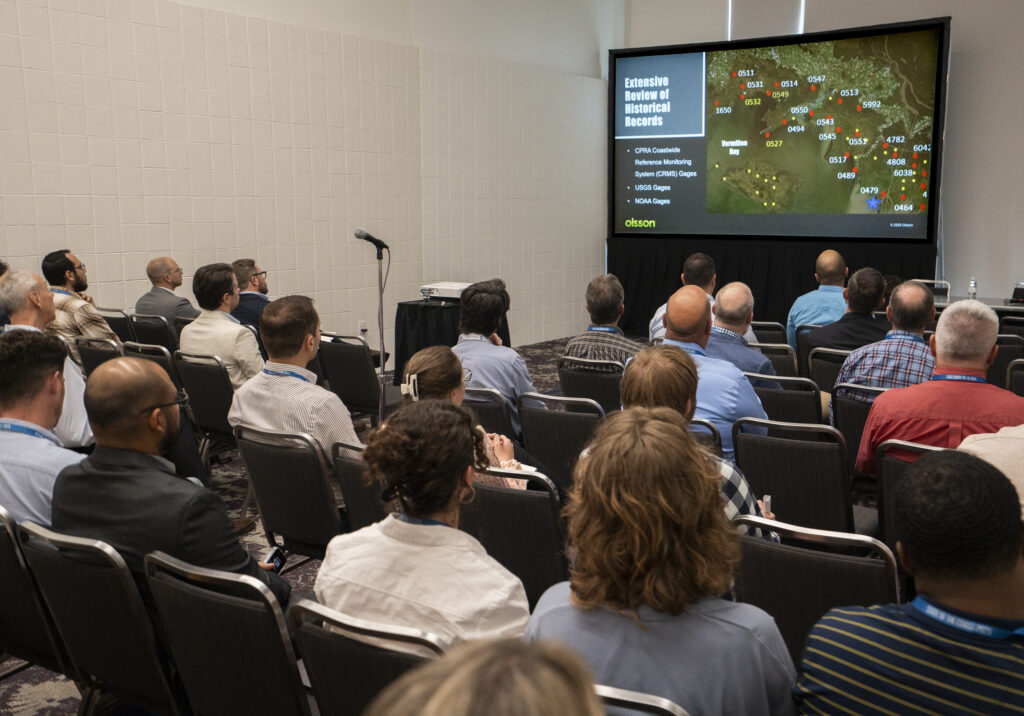
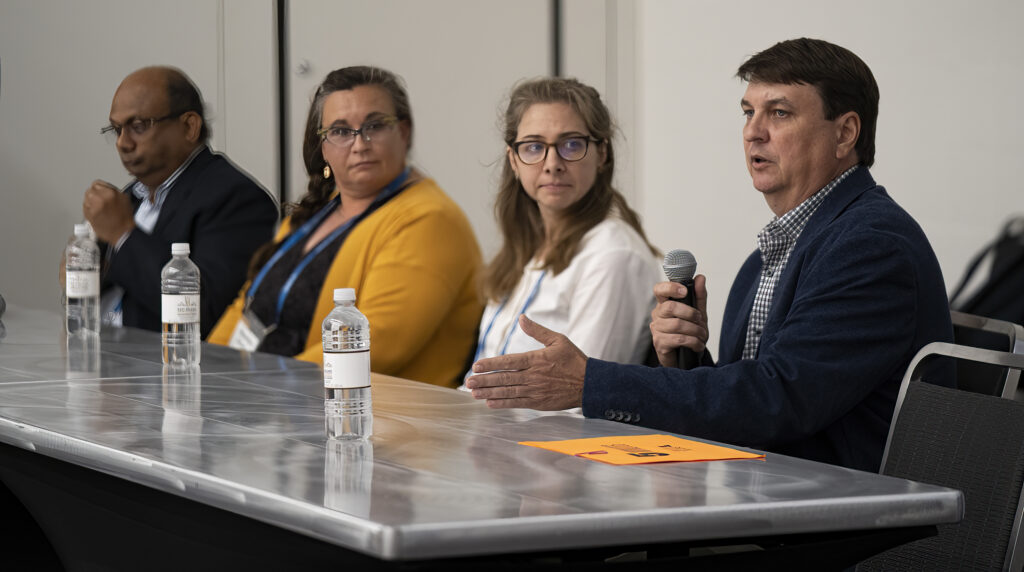
Explore challenges and solutions in a dynamic, conversational format. This 90-minute session typically includes three to five presenters from different backgrounds, sectors and perspectives talking with a moderator, followed by audience Q&A.
Standard Session
Go on a deep dive into a topic with the help of visual aids. This 90-minute session typically includes four 15-minute PowerPoint presentations, with each talk followed by five minutes of audience Q&A.
Lightning Session
Inject energy into the room and offer a wide range of perspectives with a series of brief, related presentations. This 90-minute session includes eight to ten speakers, each with a seven-minute PowerPoint presentation and followed by audience Q&A.
Workshop
Get interactive and teach skills, tools and frameworks that participants can apply immediately. Workshops must fit within 90 minutes and typically include at least two facilitators.
Individual Presentation
Have a 15-minute presentation you want to give but don’t have a standard session in mind for it? The program committee may find a session to include it in.
Poster Presentation
Each year, SOC hosts a two-hour poster reception for presenters who want to get out from behind the podium while having dynamic discussions about their research and projects. Posters are around 3 x 7 feet in landscape orientation.
How To Submit
Panel Session
If you are submitting a 90-minute panel session, you will need:
✔️ A title of your session and a description of no more than 250 words
✔️ A moderator, including their name and contact information
✔️ Three to five panelists, including their names and contact information
Things to note:
• The session organizer should contact all participants and confirm their participation before including them in the proposal.
• A moderator cannot also be a panelist in the same session.
Standard Session
If you are submitting a 90-minute standard session, you will need:
✔️ A title of your session and a description of no more than 250 words
✔️ A moderator, including their name and contact information
✔️ Four presenters, including their names and contact information
✔️ Titles and abstracts of the presentations given by the four presenters, with each abstract or presentation description no more than 250 words
Things to note:
• The session organizer should contact all participants and confirm their participation before including them in the proposal.
• A moderator cannot also be a presenter in the same session.
• The presentation abstracts or descriptions should be attached to the proposal in a separate Word document or PDF. Please consult this template when creating your attachment.
Lightning Session
If you are submitting a 90-minute lightning session, you will need:
✔️ A title of your session and a description of no more than 250 words
✔️ A moderator, including their name and contact information
✔️ Eight to ten presenters, including their names and contact information
✔️ Titles and abstracts of the presentations given by the eight to ten presenters, with each abstract or presentation description no more than 250 words
Things to note:
• The session organizer should contact all participants and confirm their participation before including them in the proposal.
• A moderator cannot also be a presenter in the same session.
• The presentation abstracts or descriptions should be attached to the proposal in a separate Word document or PDF. Please consult this template when creating your attachment.
Workshop
If you are submitting a 90-minute workshop, you will need:
✔️ A title of your workshop and a description of no more than 250 words
✔️ At least two facilitators, including their names and contact information
Individual Presentation
If you are submitting a 15-minute presentation, you will need:
✔️ One presenter, including their name and contact information
✔️ A title for your presentation and an abstract or description of no more than 250 words
Note: If your 15-minute presentation is accepted, the program committee will organize you into a standard session of related presentations.
Poster Presentation
If you are submitting a poster presentation, you will need:
✔️ One presenter, including their name and contact information
✔️ A title for your poster and an abstract or description of no more than 250 words
For all proposals, note:
• The program committee evaluates each proposal based on the characteristics listed in these guidelines and has final authority on which proposals are accepted.
• All proposals will be reviewed by the program committee, which will select sessions and work with presenters to shape a program that is balanced, solution-oriented and relevant.
• Proposals may be accepted, waitlisted or declined. We anticipate there will be more proposals than there are spots available for sessions.
• All accepted presenters will be required to register for SOC.
• Presenters who do not register for SOC within 30 days of notification of their acceptance will have their presentation slot offered to someone on the waitlist.
If you have further questions, contact Morgan Randall.
Proposal Timeline
August 11 – Call for proposals announced
August 31 – Call for proposals webinar
October 5 – Call for proposals closes
December – Presenters notified of decisions
January – Deadline for accepted presenters to register
February – Program announced
Frequently asked questions
⇨ Can I submit multiple proposals or give multiple presentations?
Yes. Conference participants can present up to one poster, one lightning presentation and a combination of the following: either two 15-minute presentations, two panels or one 15-minute presentation and one panel. Additional considerations will be assessed on a case-by-case basis.
⇨ How are proposals selected?
The program committee considers the proposal’s relevance to the topic, timeliness of the subject matter, diversity of perspectives within a session and the engagement of students.
⇨ What is the difference between an abstract and a presentation description?
When submitting a proposal that includes one or more 15-minute presentations, you’re asked to include an abstract or presentation description. While these are technically two different things, both solve for the same need: a 15-minute presentation requires a short summary of what it’s about.
Presenters in research fields are likely familiar with the term “abstract.” An abstract is a short summary of a study or research. It typically includes the question driving the study, the method used to answer the question, and the results of the study.
However, not every presentation given at SOC is based on a study. For example, a presentation might be on best practices and lessons learned from an outreach project led by a community organizer. In a case like this, it might be more accurate to call the summary a “presentation description.”
If you have further questions on this topic, email Morgan Randall.
⇨ What do the different speaker roles mean?
“Speaker” is an umbrella term to denote a potential or accepted participant in an SOC session or the poster reception. There are several speaker “roles” you can choose from when completing the proposal form:
• Session Organizer – A role associated with panel, standard, lightning or workshop sessions. This person puts together the proposal and coordinates the other speakers in the session (moderator, panelist, presenter, etc.) but doesn’t plan to participate in the session on the day of the event.
• Moderator – A role associated with panel, standard or lightning sessions. This person introduces the panelists or presenters and facilitates panel discussion and/or audience Q&A.
• Panelist – A role associated with panel sessions. This person responds to topics or questions during a panel discussion.
• Presenter – A role associated with standard sessions, lightning sessions or individual presentations. This person gives a short presentation with the aid of slides.
• Workshop Facilitator – This person facilitates a skills-based workshop.
• Poster Presenter – This person gives a poster presentation during the poster reception.
⇨ Is there an option to present or observe sessions virtually?
SOC 2027 will be an in-person event. There will be no option for virtual participation in the conference.
⇨ Will program participants have registration fees waived?
All program participants will be required to register for the conference. Community and student scholarships and opportunities for registration fee waivers will be available. Details to come.
⇨ Are students eligible to present?
Yes. Students are encouraged to submit proposals. Students whose proposals are accepted will be invited to participate in a student competition and will be given preference for student scholarships. Details of the competition to come.
⇨ Will sessions be filmed and made available online?
Sessions will not be filmed during the conference. However, presenters may opt in to share their presentation slide decks on the conference website after the event. These slides will be free for all to view.
⇨ Will posters be uploaded and made available online?
Yes. Poster presenters may opt in to share their posters on the conference website after the event. These posters will be free for all to view.
For further questions or if you are having technical difficulties submitting your proposal, please email Morgan Randall.